

My Singing Monsters Composer
Big Blue Bubble Inc
My first impression of My Singing Monsters Composer was that it is less like a traditional mobile game and more like a small, playful music workshop. I was not simply tapping along to a finished song. I was arranging a cast of strange, colorful Monsters and listening to how their individual sounds fit together. That central idea gives the game its identity, and it is also the reason I would recommend it to someone who enjoys experimenting with music rather than chasing a conventional score.
Developed by Big Blue Bubble Inc, this is a paid music game built around the world of My Singing Monsters. It costs $4.99, carries an Everyone age rating, and has reached over 100 thousand installs. Its average rating sits at 4.0 from around 6.7 thousand ratings, with roughly 1.9 thousand written reviews. Those figures suggest a reasonably established audience, but they also reflect the fact that this is a focused experience: it appeals strongly to the right player and may feel limited to someone expecting a large adventure or a full digital audio workstation.
Building a song by conducting Monsters
The defining capability is the ability to conduct an orchestra made from the musical Monsters associated with the series. Instead of choosing a generic piano, drum kit, or synthesizer, I work with characters whose voices and noises form the arrangement. The result is immediately recognizable as a My Singing Monsters experience, but the underlying appeal is surprisingly practical: I can hear musical roles separately, combine them, and make decisions about timing and texture without needing formal music training.
That makes the game approachable in a way many music-making apps are not. A conventional sequencer may offer more control, but it often begins with empty tracks, technical terminology, and instruments that sound disconnected until the user knows what to do. Here, the Monsters provide a visual and audible starting point. I can think, “This part needs a steady pulse,” or “That sound should answer the melody,” rather than worrying first about channels, synthesis, or recording settings.
The important strength is the direct connection between a character and a musical function. When I change an arrangement, I am not just moving anonymous notes around. I am deciding which Monster should carry a pattern and how its personality changes the overall mood. That makes trial and error feel rewarding, especially for younger players or anyone who learns better by hearing an immediate result.
Related News






The experience also works well as a gentle introduction to arrangement. I can notice that a crowded section becomes harder to follow, that a repeated rhythm gives a song stability, or that a contrasting sound can make a simple phrase feel more interesting. The game does not need to lecture me about these ideas. It lets the ear do most of the teaching.
What arranging feels like during ordinary play
In practice, I approach a song in short sessions. I listen to the existing musical idea, focus on one Monster at a time, and adjust the pattern until it feels as though it belongs. That workflow is much less intimidating than opening a blank music application. I can begin with a small change, replay it, and decide whether the new layer helps or distracts from the rest.
The most useful habit is to listen repeatedly at low volume rather than making every decision from a single enthusiastic first impression. A sound that seems funny or exciting on its own can dominate the arrangement when everything plays together. I found it easier to build from the rhythmic foundation, then add more noticeable voices, and finally remove anything that made the result feel cluttered. The game rewards restraint as much as adding new material.
Gallery
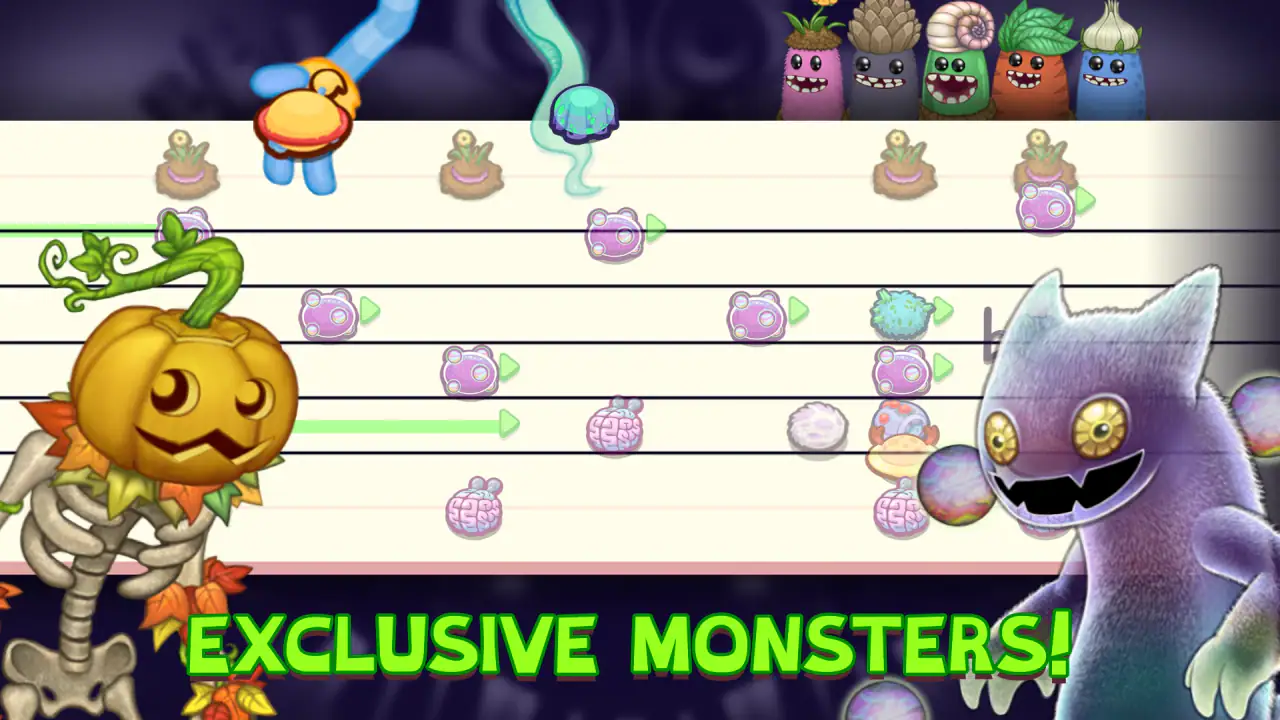
That is one of the less obvious lessons here. Because the Monsters are entertaining individually, it is tempting to include every appealing sound. The better results usually come from treating the arrangement like a conversation: one voice establishes an idea, another responds, and a third fills the space without shouting over the others. Even if I am only playing casually, that process gives the activity more depth than a collection of random taps.
I also like that the visual presentation keeps the creative task friendly. The Monsters make the screen feel lively, so experimenting does not carry the pressure of using professional production software. If a combination sounds awkward, I can change it and continue. There is no sense that I have ruined a serious recording session.
A realistic use case for short creative breaks
A good everyday scenario is a ten-minute break after school or work. I can open the game, revisit a musical idea, adjust one or two parts, and stop without needing to prepare a project or connect equipment. It suits the kind of casual concentration that is difficult to get from a purely passive game. I am relaxing, but I am also making small creative decisions.
It can work particularly well for a parent and child playing together. One person can choose the Monsters while the other listens for whether the arrangement feels balanced. That turns the app into a shared activity rather than something that demands fast reflexes. A child who is curious about music can experiment freely, while an adult can discuss simple concepts such as repetition, contrast, and keeping a beat without turning the session into a lesson.
Another useful scenario is idea sketching. I would not treat this as a replacement for a serious composition environment, but it can help me explore whether a rhythmic or melodic thought has energy. The Monster sounds give the sketch a clear character. If I later want to develop the idea elsewhere, the game has still served as a low-pressure place to discover what I like.
There is also value in using it when I feel stuck. A blank page can be discouraging, while a cast of distinctive sounds gives me something concrete to react to. I may not begin with a complete plan; I can start by asking which voices work together. That change from inventing everything to responding to available sounds is a real creative advantage.
Where the game differs from ordinary music apps
Compared with a piano-learning app, this game is more about arranging than practicing an instrument. It will not replace structured lessons for someone who wants to improve finger technique, reading, or performance. Compared with a rhythm game, it places less emphasis on hitting notes at the right instant and more emphasis on shaping the musical result. Compared with a full music workstation, it is far easier to approach but much narrower in purpose.
That narrowness is not automatically a problem. In my experience, it is exactly what makes the app inviting. A full workstation can overwhelm a beginner with choices, while this game gives the player a defined sound world. The trade-off is that an experienced producer may quickly want controls that are not part of this focused Monster-based format. If I want detailed recording, extensive instrument selection, or advanced mixing, I would choose a dedicated music tool instead.
The game is also different from the broader My Singing Monsters experience. Someone arriving from that series may enjoy seeing familiar musical creatures in a more composition-focused setting, but this is not primarily about managing a large island or progressing through a broad collection of activities. Its appeal comes from directing the music itself. I would choose it when I want to arrange, not when I want a wider management or collection loop.
The trade-off between simplicity and control
The strongest limitation is closely tied to the strongest benefit: simplicity reduces friction, but it also limits precision. I can get to a musical result quickly because the game does not ask me to understand a complicated production system. At the same time, players who already know exactly how they want to edit a piece may find the available creative space too contained.
That means the purchase makes more sense when I value the Monster voices and the playful workflow specifically. Paying for a focused music game is different from downloading a free casual title for a few minutes of distraction. Before buying, I would ask myself whether arranging these characters sounds appealing on its own. If the answer is yes, the focused design is a benefit. If I mainly want a broad catalog of instruments or professional control, the price is better spent on an alternative built for that purpose.
Another trade-off is that the game can encourage perfectionism in a quiet way. Because changing a part is easy, I may keep adjusting small details without deciding what the song is trying to do. My practical solution is to choose a simple goal for each session: strengthen the rhythm, make the melody clearer, or remove one distracting layer. That keeps the creative process moving instead of turning it into endless tweaking.
I would also avoid judging the experience after only a few minutes. The first session is mostly about understanding the sound relationships. The more interesting part begins when I stop treating each Monster as a novelty and start assigning it a deliberate role. Players who want instant spectacle may find the pace modest, while players who enjoy gradual refinement will probably get more from it.
Who will get the most from it
The best audience is someone who likes music, character-driven games, and low-pressure experimentation. It is suitable for a curious beginner who has never opened a composition app, a My Singing Monsters fan who wants a more hands-on musical activity, or an experienced listener who enjoys arranging simple layers for fun. The Everyone rating also makes it an approachable choice for family settings, although the ideal experience still depends on whether the player enjoys listening and adjusting rather than competing.
It is especially good for people who learn by doing. I can understand a musical choice because I hear the consequence immediately. That is more memorable than reading an explanation of rhythm or harmony in isolation. The game gives me a safe space to make imperfect choices, compare them, and develop an ear for what feels crowded, empty, balanced, or surprising.
I would be more cautious about recommending it to someone seeking a long, content-heavy adventure, a competitive challenge, or a complete studio in a phone. The current version is 2.0.5, and the experience remains centered on its composing concept rather than trying to become every kind of music app at once. That focus is admirable, but it means the right expectations matter.
It is also not the ideal first choice for someone who dislikes repeating short musical phrases. Arrangement naturally involves replaying sections, making a small change, and listening again. If that process sounds satisfying, the game can be calming and absorbing. If it sounds tedious, the charming Monsters may not be enough to carry the experience.
My recommendation after using the composer
I came away viewing My Singing Monsters Composer as a compact creative instrument disguised as a character game. Its best feature is not simply that it contains musical Monsters; it is that those characters make composition feel concrete. I can hear an idea take shape without first learning the vocabulary or interface of a professional tool.
The $4.99 price is easiest to justify for players who specifically want this Monster-centered approach. I would not buy it expecting endless genres, a full recording studio, or a conventional score-chasing structure. I would buy it for the pleasure of building a small arrangement, hearing how different voices interact, and returning later to improve the balance.
My most practical advice is to begin with fewer parts than you think you need, listen to the whole arrangement several times, and add a new voice only when you can explain what it contributes. That approach reveals the game’s real value: it quietly teaches me to listen, choose, and edit while keeping the mood playful. For a focused music game on Android, it offers a distinctive experience that is simple to enter but thoughtful enough to reward careful ears.
Big Blue Bubble Inc has kept the idea clear and memorable. If you want a friendly way to experiment with musical structure and you already enjoy the world of My Singing Monsters, I think this is worth considering. If your goal is formal instrument practice or advanced production, I would point you elsewhere. For everyone between those extremes, it is a charming little workspace where the Monsters do more than sing: they give me a reason to compose.
FAQs for My Singing Monsters Composer
What is My Singing Monsters Composer?
My Singing Monsters Composer is a music-creation app based on the popular My Singing Monsters universe. It lets you arrange monster characters on a musical grid and use their individual sounds to build songs. The app is designed for both beginners and experienced users, offering a playful way to experiment with rhythm, melody, harmony, and song structure.
Do I need to play the original My Singing Monsters game first?
No, you do not need to play the original My Singing Monsters before using Composer. The app can be enjoyed independently, although fans of the main game may recognize many of the monsters and sounds. New users may need a little time to understand the interface, but the basic controls are straightforward and the creative system becomes easier to use after a few practice sessions.
Can I create and save my own songs?
Yes, the app is built around creating and saving original musical arrangements. You can place different monsters into a song, adjust their timing, and combine their sounds into a complete composition. Saved projects can be revisited and edited later, which is useful when you want to improve the arrangement, test new combinations, or gradually develop a longer and more polished track.
Is My Singing Monsters Composer suitable for children?
The app is generally suitable for children who enjoy music, creative games, and the colorful monster designs associated with the franchise. Its visual style is friendly and the core activity is non-violent music creation. However, parents should still review the app’s store rating, device permissions, advertising or purchase information, and any sharing features before allowing younger children to use it independently.
Does My Singing Monsters Composer work offline, and is it free?
The main composing experience is intended to be accessible without requiring a constant internet connection, making it convenient for practicing or creating music while offline. Availability, pricing, advertisements, and purchase options can vary by platform and region, so you should check the Google Play Store or Apple App Store listing before downloading. Device compatibility and required storage should also be confirmed.
Pros
- Lets you compose and arrange songs using familiar monster sounds.
- Simple drag-and-drop controls make creating melodies approachable.
- Great creative tool for experimenting with rhythm
- harmony
- and vocal parts.
- Works well for fans who want to recreate songs from the main game.
- Offline play makes composing possible without an internet connection.
Cons
- Limited to the available monster sounds and musical instruments.
- Small screens can make precise note placement slightly frustrating.
- Advanced musicians may find the composition tools too basic.
- Requires patience to create polished arrangements from scratch.
- Sharing and collaboration options are more limited than in full music apps.


